8015 Lafayette Plain City Rd - Plain City, OH 43064
 Monday - Friday 8:00 am to 6:00 pm


A spare bedroom with a folding table is technically a home office. A room with custom built-ins designed around how you actually work is something entirely different, and the difference shows up every single day. Across the Columbus metro, homeowners in Worthington, Powell, and New Albany are converting underused rooms into dedicated workspaces that function as well as any professional environment.
1. Design Around Your Workflow, Not a Catalog
The most important question in a home office design isn't "what style do I like?" It's "how do I work?" A trial attorney needs substantial closed storage for files and a clean, distraction-free surface. A designer needs open shelving for reference materials and space for large-format work. A business owner who takes video calls needs a backdrop that looks intentional. Custom cabinetry starts with those functional requirements and builds the aesthetic around them, not the other way around.
2. Built-In Desks vs. Freestanding Furniture
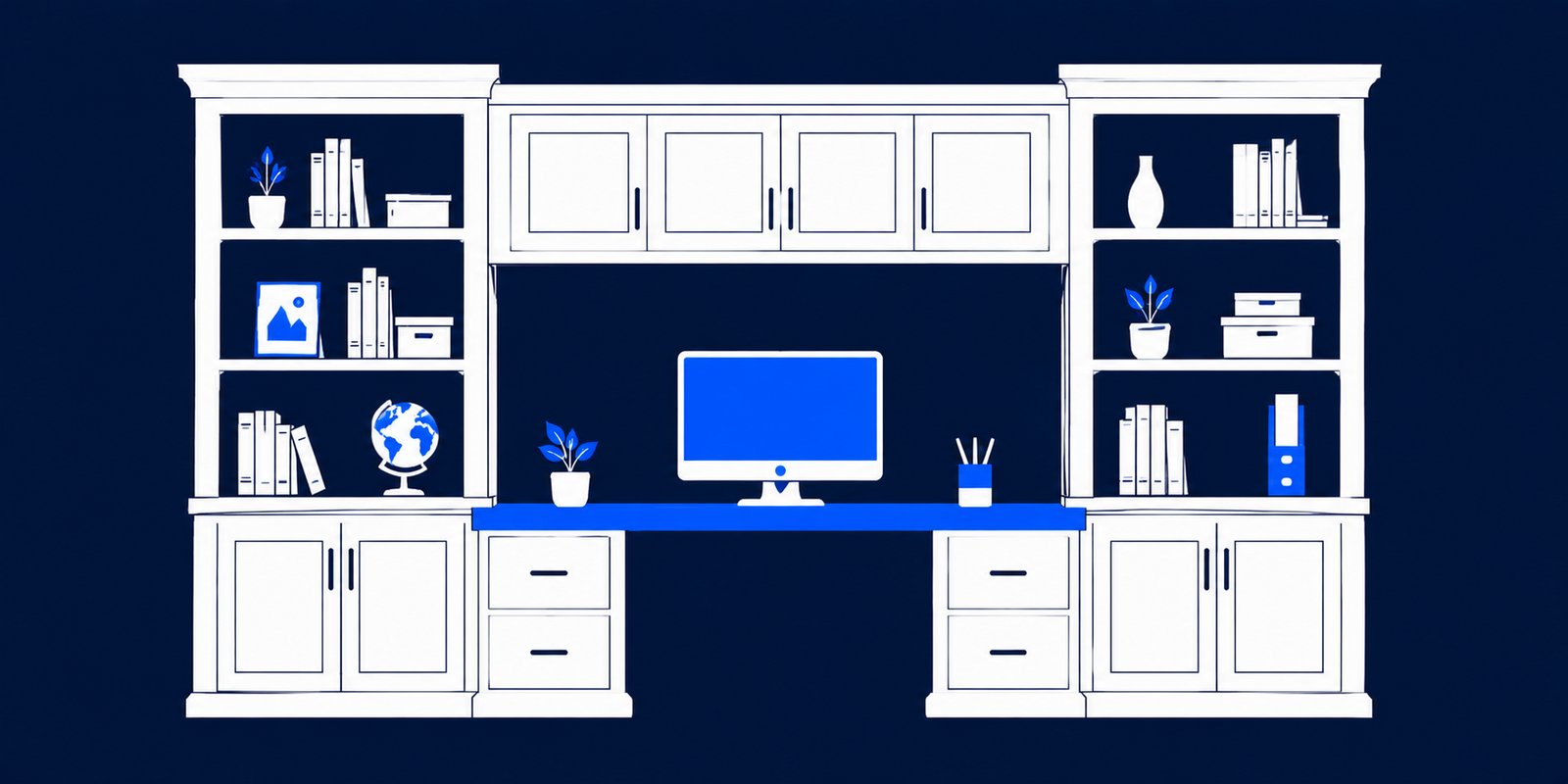
A freestanding desk can be moved. A built-in desk can be designed to use every inch of your room, filling a wall, wrapping a corner, integrating with shelving above and file storage below. Built-ins also eliminate the visual clutter of furniture legs, cords, and mismatched pieces. In a dedicated home office, a built-in desk and cabinetry system typically transforms a room that felt improvised into one that feels permanent and purposeful.
3. Storage That Hides the Work
Home offices accumulate equipment, paperwork, and supplies quickly. Custom cabinetry solves this with intentional storage, deep drawers for hanging files, pull-out shelves for printers and routers, closed upper cabinets for supplies, and open shelving where books and reference materials need to be visible. The goal is a workspace that can be closed up at the end of the day and not look like an office at all.
4. Lighting and Finish Choices Matter More Here
In a kitchen, cabinet finishes compete with countertops, backsplash, and appliances. In a home office, the cabinetry is the room. Finish color, wood species, and door profile have a stronger visual impact here than almost anywhere else in the house. Darker, richer finishes work well in rooms with substantial natural light. Lighter painted finishes keep smaller rooms from feeling heavy. Your designer can walk through what works for your specific space.
5. The Investment Compared to Alternatives
Freestanding home office furniture from a big-box retailer is inexpensive upfront and rarely satisfying long-term. The pieces don't quite fit, the storage never works the way you hoped, and the room never quite looks finished. A custom built-in office takes one design conversation and produces a space that fits your room exactly and holds up for as long as you own the house. For homeowners in Westerville, Powell, and Worthington who spend significant time working from home, the return on that investment is daily.
The Room You Actually Want to Work In
There's a real difference between tolerating your home office and genuinely looking forward to being in it. A well-designed space with cabinetry built around your specific needs makes work easier, keeps the room organized without effort, and adds to the overall value of your home. It's one of the more straightforward cases for custom cabinetry.
Interested in a custom home office built-in system? Contact Lewis Designs to schedule a complimentary in-home consultation.