8015 Lafayette Plain City Rd - Plain City, OH 43064
 Monday - Friday 8:00 am to 6:00 pm

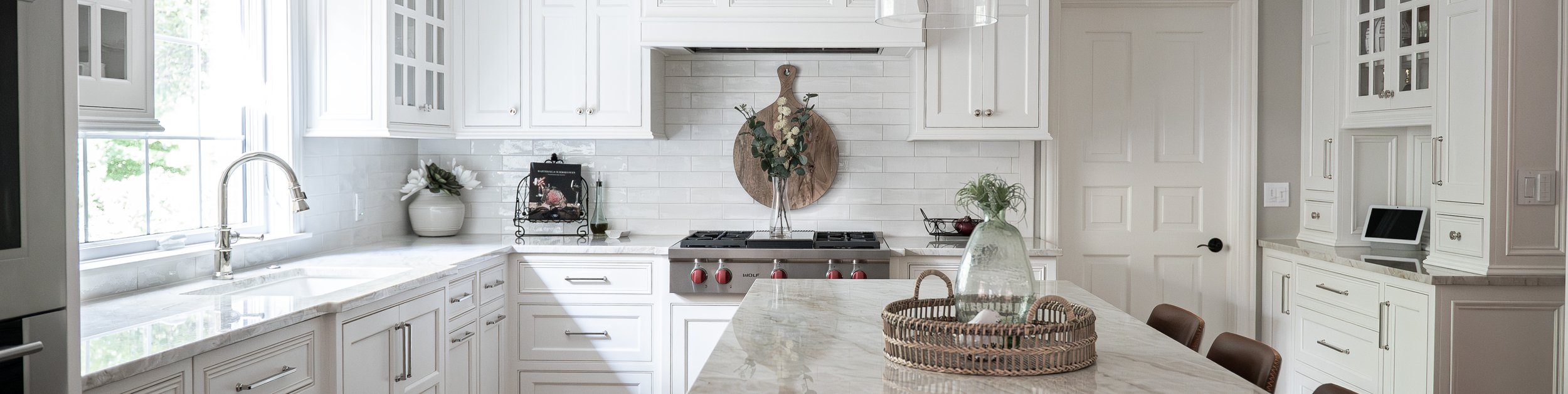

Custom cabinetry can mean almost anything. A shop charging $400 per linear foot and one charging $1,200 per linear foot can both call their product "custom." The difference is in the construction details: the materials, joinery, and hardware choices that determine how the cabinet performs over ten, twenty, or thirty years. Knowing what to look for changes what you ask for.
1. Box Construction: Plywood vs. Particleboard
The box, the carcass of the cabinet, is the most structurally important component, and it's usually the least visible. Cabinets built with plywood boxes are stronger, more dimensionally stable, and significantly more resistant to moisture and humidity than those built with particleboard or MDF. Plywood holds screws better, doesn't swell when it gets wet, and stays square over time. Particleboard is less expensive to produce. When a cabinet maker doesn't specify, ask directly: what is the box made from?
2. Drawer Box Joinery: Dovetail vs. Stapled
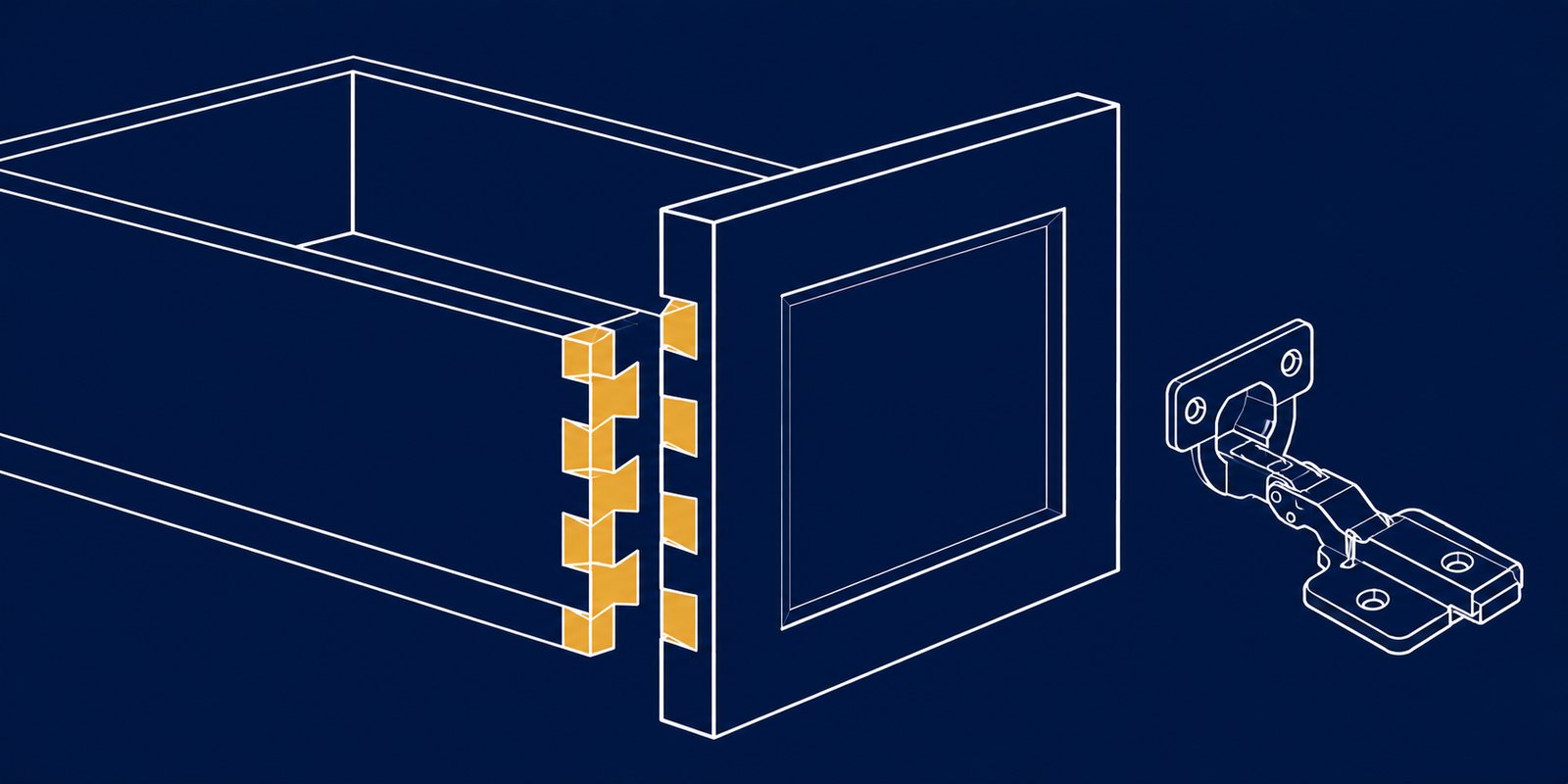
Open any drawer in a quality kitchen and look at the corners. Dovetail joints, the interlocking finger pattern at each corner of the drawer box, are the gold standard for drawer construction. They're mechanically strong, they don't rely on glue or fasteners to hold together, and they look finished even when the drawer is pulled completely out. Stapled drawer boxes are faster to produce and less expensive, but they loosen over years of use. Every drawer Lewis Designs builds uses dovetail box construction.
3. Soft-Close Hardware: Standard vs. Upgrade
Soft-close doors and drawers have become the expected standard in quality custom cabinetry. Hinges that prevent cabinet doors from slamming, drawer slides that catch and close gently in the last few inches. In many cabinet shops, these are optional upgrades billed as line items. At Lewis Designs, soft-close hardware on every door and drawer is standard on every project, because a cabinet that slams is not a quality cabinet regardless of what the box is made of.
4. Finish Application: Spray vs. Brush
A factory-sprayed finish on a cabinet is more consistent, more durable, and smoother than a brush-applied finish. Custom shops with in-house finishing facilities can spray your cabinets in a controlled environment with consistent film thickness, no brush marks, proper curing time. The difference between a spray-applied Benjamin Moore finish and a brush-applied one is visible at close range on a painted door, particularly in raking light. It's worth asking how a shop applies their finishes before you commit.
5. Face Frame vs. Frameless Construction
Traditional American cabinetry uses a face frame, a hardwood frame attached to the front of the box that the doors and drawers mount to. European-style frameless cabinetry attaches doors directly to the box for a more contemporary look with slightly more interior access. Both are legitimate construction approaches with different aesthetic implications. What matters is that the method is executed correctly for the style you're building. Hybrid approaches, such as frameless boxes with overlay doors that mimic traditional proportions, are also common in transitional designs.
The Details That Outlast the Trends
Cabinet style trends change. Shaker doors, flat panels, raised panels, what's fashionable cycles. The construction quality underneath the door profile doesn't change. A plywood box with dovetail drawers and quality soft-close hardware will still be operating correctly when the finish style has gone in and out of fashion twice. Investing in the underlying quality is the part of the decision you won't regret.
Contact Lewis Designs to discuss construction specifications for your project and see how our standard build compares to what you've been quoted elsewhere.